Defined botanical markers
Chlorogenic-acid content provides a practical assay marker for comparing raw materials and verifying finished-product input.
 Get a Quote →
BOTANICAL & METABOLIC · INGREDIENT DIRECTION
An extract of unroasted coffee beans, usually standardised for chlorogenic acids with a separately controlled caffeine level.
Discuss this ingredient →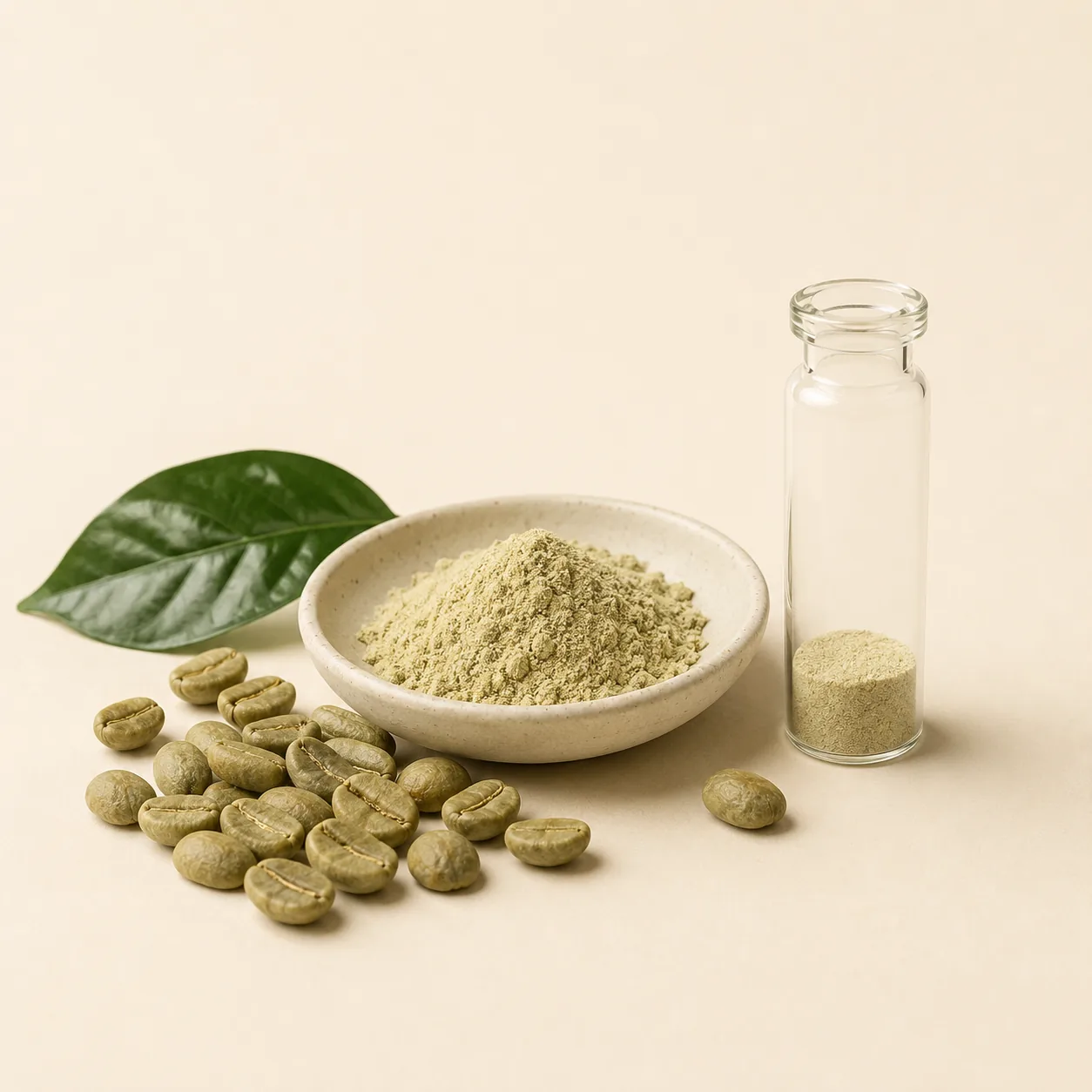
WHY BRANDS CONSIDER IT
Chlorogenic-acid content provides a practical assay marker for comparing raw materials and verifying finished-product input.
Caffeinated and lower-caffeine grades allow the formula to be matched to daytime energy or stimulant-conscious positioning.
The concentrated extract is compatible with capsules, tablets, powders and selected gummy or liquid systems after taste testing.
INGREDIENT REALITY
Green coffee bean extract is produced from unroasted seeds of Coffea species. Because roasting changes coffee polyphenols, these extracts are commonly sold by their chlorogenic-acid content rather than simply by an extract ratio.
The name does not define one composition. Species, extraction solvent, chlorogenic-acid assay and residual caffeine can vary substantially, so the product specification should state each of these parameters.
EVIDENCE IN CONTEXT
Small trials have reported possible effects on body weight, but the NIH describes the evidence as limited and the available studies as methodologically weak. The ingredient should therefore not carry an automatic or guaranteed weight-loss promise.
A defensible product story focuses on a standardised coffee botanical, transparent caffeine disclosure and its role within a broader nutrition and lifestyle formula.
OEM / ODM DEVELOPMENT
These checkpoints help convert an ingredient idea into a reproducible specification, suitable dosage form and retail-ready product brief.
Specify total chlorogenic acids, the test method, caffeine range and botanical identity. An extract ratio alone is not enough to characterise the material.
Review extraction solvent, residual-solvent limits, pesticides, heavy metals and microbiology, together with supplier traceability.
The extract can be bitter and brown-green. Bench-test flavour masking and colour compatibility in powders, gummies and liquids.
Add caffeine from every botanical and flavour source in the formula, then set serving instructions and warnings for the target market.
SAFETY & COMPLIANCE NOTE
Caffeine content must be declared and controlled even when the front label emphasises chlorogenic acids. Consider sensitivity, pregnancy, children, sleep, cardiovascular conditions and concurrent stimulant products. Product claims and warnings should be reviewed for each sales market.
Final formula, serving size, label claims and warnings must be assessed for the intended population and destination market. This ingredient page is for B2B product development and is not medical advice.AUTHORITATIVE READING
SUITABLE SUPPLEMENT FORMATS
Compare the dosage forms that fit this ingredient direction, then connect it with a functional positioning and private-label manufacturing route.
START A GREEN COFFEE BEAN EXTRACT PROJECT
Include your target market, intended function, preferred dosage form, key ingredients and expected order quantity.