Oil-format compatibility
CLA is naturally suited to softgels and can also be developed in carefully stabilised emulsions or liquid systems.
 Get a Quote →
SPORTS & PERFORMANCE · INGREDIENT DIRECTION
An oil-based mixture of conjugated linoleic-acid isomers whose identity, isomer ratio and oxidative stability define finished-product quality.
Discuss this ingredient →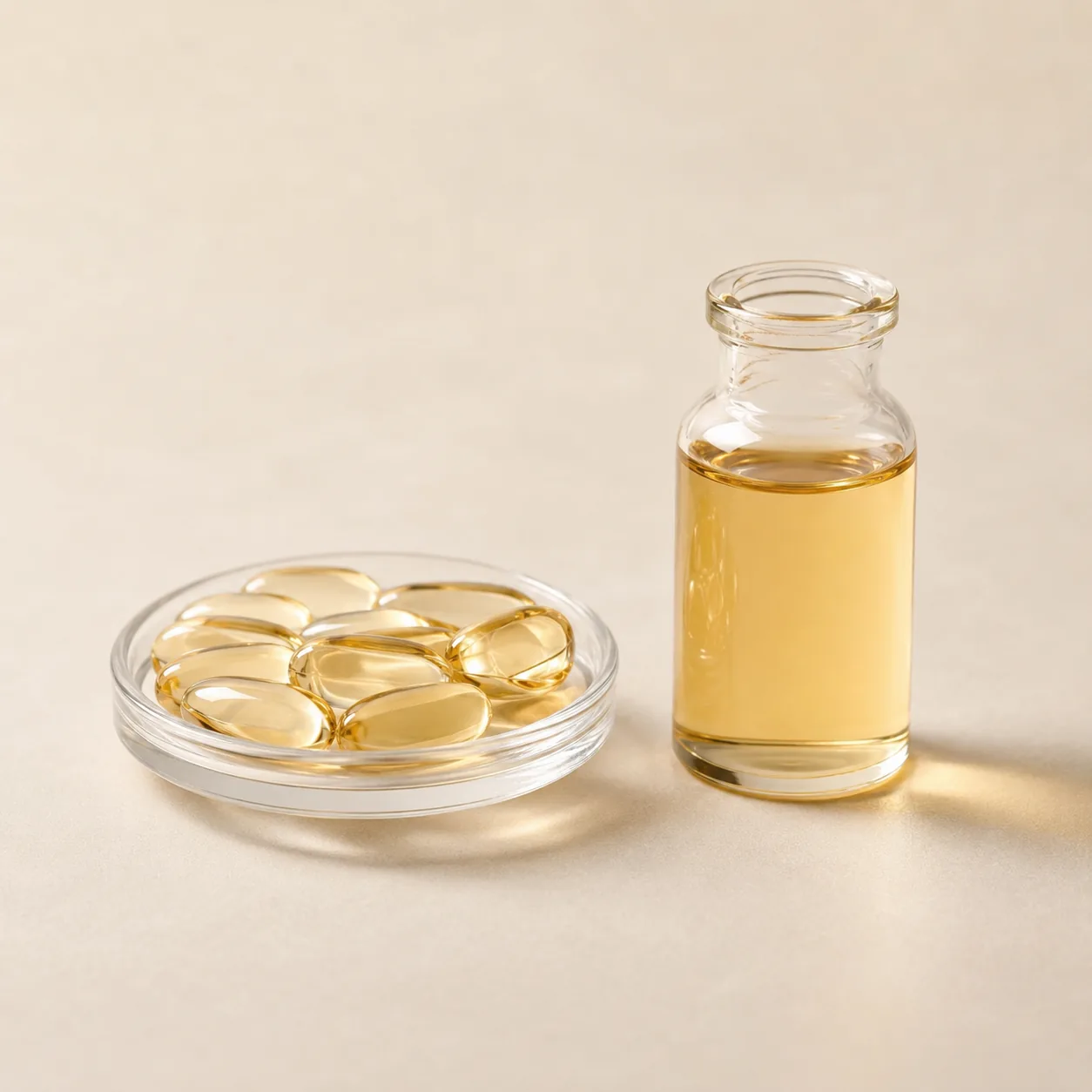
WHY BRANDS CONSIDER IT
CLA is naturally suited to softgels and can also be developed in carefully stabilised emulsions or liquid systems.
Total CLA and the relative c9,t11 and t10,c12 isomers provide specific, testable raw-material quality parameters.
It can support body-composition category concepts when the language clearly avoids guaranteed or localised fat-loss promises.
INGREDIENT REALITY
Conjugated linoleic acid describes linoleic-acid isomers with conjugated double bonds. Small amounts occur naturally in dairy and ruminant meat, while supplements commonly provide a concentrated oil mixture of c9,t11 and t10,c12 isomers.
The two main isomers do not necessarily have identical biological or safety effects. A procurement specification should therefore include total CLA, isomer distribution, carrier oil, oxidation values and antioxidant system.
EVIDENCE IN CONTEXT
Human trials suggest that CLA may produce only a small reduction in body weight or body fat, and NIH describes the clinical significance as uncertain. Outcomes cannot be inferred from animal research or from total oil weight.
A responsible product positions CLA as one component of a complete active-lifestyle formula and communicates the actual CLA amount rather than promising dramatic body transformation.
OEM / ODM DEVELOPMENT
These checkpoints help convert an ingredient idea into a reproducible specification, suitable dosage form and retail-ready product brief.
Set total CLA, c9,t11 and t10,c12 ranges, fatty-acid profile, source and carrier oil rather than buying on total oil weight.
Define peroxide and anisidine values, antioxidants, oxygen exposure and light protection from raw material through shelf life.
Softgels provide efficient oil delivery. Emulsions and liquids need validated dispersion, flavour and oxidation control.
Account for oil assay and processing losses, then verify CLA and rancidity markers in stability samples.
SAFETY & COMPLIANCE NOTE
CLA can cause gastrointestinal discomfort. Some studies raise isomer-specific concerns about glucose or lipid metabolism, and long-term high-dose safety is not fully defined. Evaluate intended users, daily exposure and combinations with other metabolic ingredients before launch.
Final formula, serving size, label claims and warnings must be assessed for the intended population and destination market. This ingredient page is for B2B product development and is not medical advice.AUTHORITATIVE READING
SUITABLE SUPPLEMENT FORMATS
Compare the dosage forms that fit this ingredient direction, then connect it with a functional positioning and private-label manufacturing route.
START A CLA PROJECT
Include your target market, intended function, preferred dosage form, key ingredients and expected order quantity.